
(English)
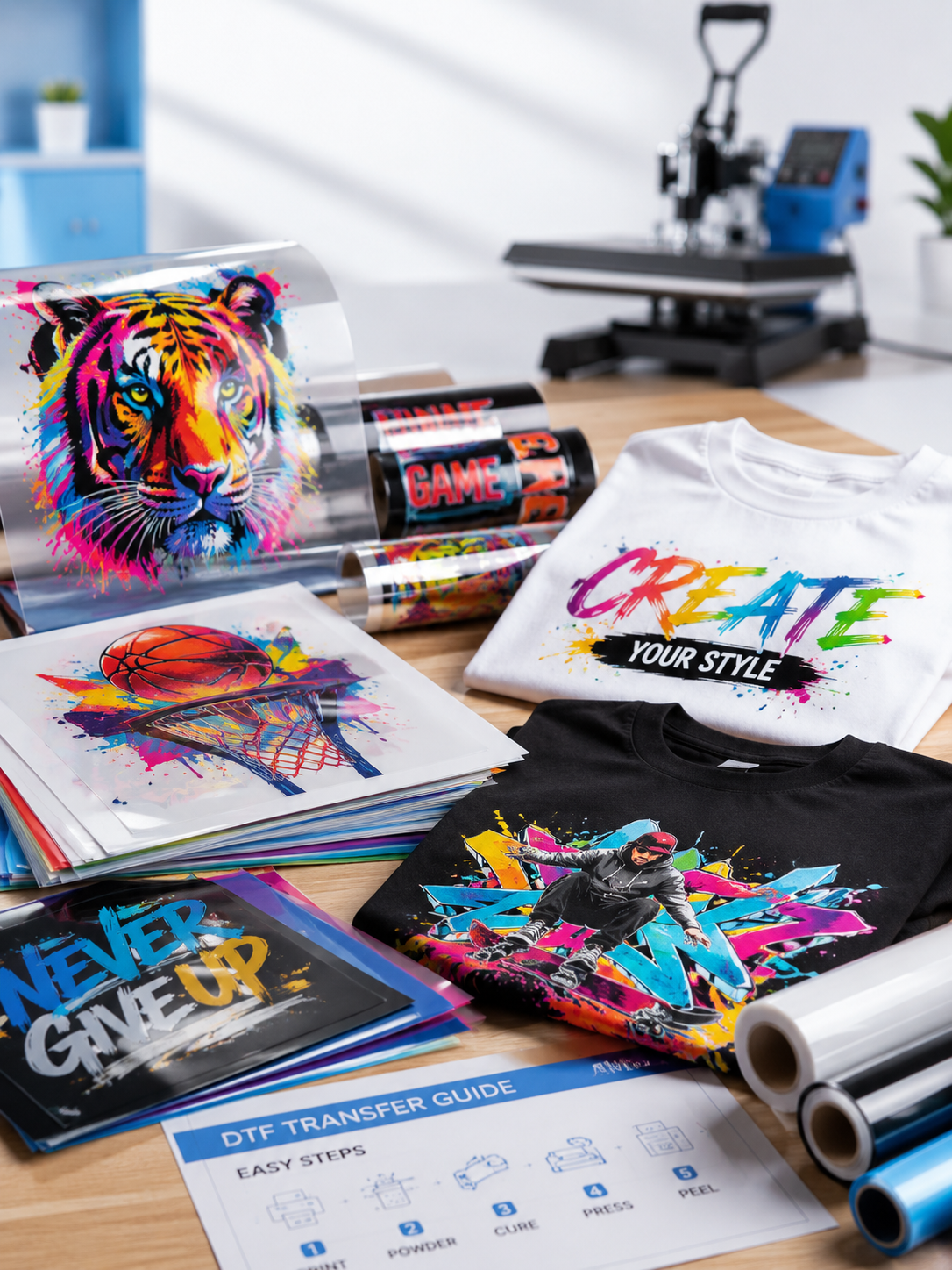
Custom apparel printing has become one of the fastest-growing businesses in the digital printing industry. From personalized T-shirts and hoodies to promotional clothing and sportswear, transfer printing offers an easy and cost-effective solution for creating vibrant designs on fabric.
But one question still appears frequently among beginners and small businesses: how to use transfer paper correctly?
Whether you use an inkjet printer, laser printer, sublimation printer, or a modern DTF printer, understanding the transfer process is essential for producing durable and professional-quality prints. In this guide, we will explain how transfer paper works, compare different transfer methods, and show why DTF printing technology is becoming the preferred solution for custom garment printing.
Transfer paper is a special coated media used to move printed artwork onto fabric or other materials using heat and pressure. The process works by printing a design onto transfer paper or PET film and then applying it to garments with a heat press machine.
A standard transfer system usually includes:
When heat and pressure are applied, the design bonds with the fabric surface, creating a permanent image.
The quality of the final result depends heavily on:
Incorrect settings may cause fading, peeling, or cracking after washing.
Today’s textile printing market includes several popular transfer technologies. Each method has different advantages depending on your application and production needs.
Inkjet transfer paper is commonly used for beginner-level T-shirt printing. It works with standard desktop inkjet printers and is suitable for small-batch production.
There are two main types:
This method is affordable and easy to start with, but durability is relatively limited compared with professional garment printing systems.
Laser transfer printing uses toner instead of liquid ink. It produces sharp text and clean graphics, making it suitable for logos and promotional products.
Advantages include:
However, laser transfer prints may feel slightly stiff on fabric.
Sublimation printing is widely used for polyester apparel, sportswear, mugs, and promotional items. During heating, sublimation ink turns into gas and penetrates the material surface.
Benefits include:
Limitations:
DTF printing has become one of the hottest technologies in the textile printing industry. A DTF printer prints designs onto PET film using CMYK and white ink, followed by hot melt powder application and heat transfer.
Compared with traditional transfer paper, DTF transfer film offers:
This flexibility makes DTF printing ideal for custom apparel businesses, print shops, and on-demand garment production.
Although different transfer methods have unique workflows, the basic process is relatively simple.
Create or edit your artwork using graphic software such as Photoshop or Illustrator. High-resolution images provide better printing quality.
For heat transfer printing:
Choose the correct transfer media and printer settings.
Common printing equipment includes:
For DTF printing, the printer applies:
This combination improves color brightness on dark garments.
For standard transfer paper, adhesive is already included.
For DTF transfer printing:
This process ensures strong adhesion to fabric.
Before transferring:
This step improves transfer consistency.
Use a heat press machine to transfer the design onto the garment.
Typical settings:
The exact settings depend on the transfer material and fabric type.
Some transfer papers require hot peel, while others need cold peel.
After peeling:
Compared with traditional heat transfer methods, DTF printing offers several important advantages for modern apparel businesses.
Unlike sublimation printing, DTF transfers work on:
This makes DTF printing highly versatile.
DTF transfer film produces:
Prints remain vivid even after repeated washing.
Traditional screen printing requires:
DTF garment printing simplifies production and supports:
With digital textile printing, businesses can print only what customers order. This reduces:
Many beginners encounter problems during transfer printing. Here are several common mistakes:
Too much heat can burn fabric or damage transfer film.
Weak pressure prevents proper bonding.
Moisture trapped in garments may affect adhesion.
Low-quality transfer paper may cause fading or peeling.
Some methods only work with specific materials.
Understanding these factors helps improve print consistency and customer satisfaction.
To maximize durability:
DTF prints are especially durable because the adhesive layer bonds strongly with fabric fibers.
As the demand for custom apparel printing continues growing, many businesses are switching to professional DTF printing equipment.
TODOjet DTF printers offer:
Combined with premium DTF transfer film and hot melt powder, TODOjet printers help businesses produce professional heat transfer products efficiently.
Whether you run:
DTF technology can significantly improve production flexibility and profitability.
Transfer paper printing remains one of the easiest ways to enter the custom apparel market. From inkjet transfer paper to sublimation and advanced DTF printing, each method offers unique benefits for different applications.
However, as customer expectations continue rising, DTF transfer printing is quickly becoming the preferred solution for modern garment decoration. Its compatibility with multiple fabrics, excellent durability, vibrant colors, and efficient workflow make it ideal for both small studios and industrial textile printing businesses.
With professional equipment like TODOjet DTF printers, businesses can produce high-quality custom apparel faster, easier, and more profitably than ever before.
 WhatsApp me


